

Open Source
Whisper
Robust speech-to-text from OpenAI’s open model—transcribe podcasts, calls, and user audio for content products.
No reviews yet

Open text-to-speech toolkit for voice features—add narration and spoken UX without renting a closed voice API forever.
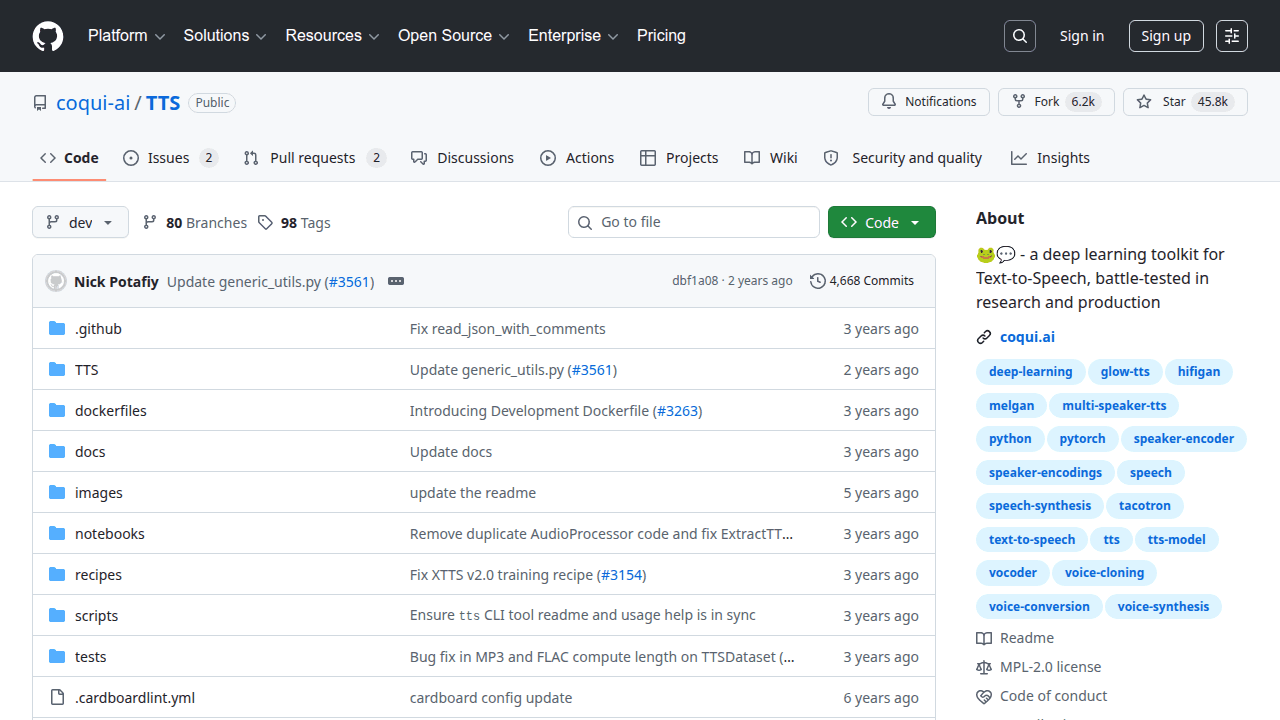
Coqui TTS is an open-source project solopreneurs use when they want leverage without locking every workflow into a closed SaaS. Open text-to-speech toolkit for voice features—add narration and spoken UX without renting a closed voice API forever. Coqui TTS is an open-source text-to-speech toolkit for training and running speech synthesis models. Solopreneurs building education, accessibility, or content tools use it when voice output is core and they want ownership over the stack.
Why solopreneurs use it
Voice APIs are excellent until pricing, branding limits, or offline needs intervene. Owning TTS capability lets you differentiate with custom voices (ethically and legally) and ship air-gapped demos. The learning curve is real, but for voice-first products it can be strategic infrastructure. Always obtain rights for any cloned or trained voice.
What you can build
Course narration pipelines, read-aloud features, voice agents’ mouths, and audiobook drafts for authors. Games and interactive fiction also need flexible TTS.
Getting started tip
Begin with a pretrained model that matches your language, generate short samples for l. As with most OSS, validate maintenance activity on recent commits and issues before you bet a production roadmap on it. On SolopreneursHub we file it under Audio & Voice so you can discover it next to related AI repos, AI tools, and AI models.
Coqui TTS fits solo founders, indie hackers, and small agencies who need a concrete capability—tts, voice, speech, oss—without hiring a platform team. If you are validating an AI-assisted product, packaging a niche assistant, or cutting SaaS spend while you grow MRR, this repo is worth a serious look. It is less ideal if you need a turnkey consumer app with SLAs on day one; in that case start with a hosted product from our tools directory and revisit Coqui TTS when margins or privacy requirements push you toward self-hosting.
Keep this Coqui TTS listing open next to our open-source category and the upstream GitHub repository for README details, license terms, and release notes.
Replace a paid SaaS seat. If a vendor charges per seat for something Coqui TTS already covers well enough, OSS can drop COGS while you stay flexible.
Build an agent or RAG feature. Coqui TTS often becomes a building block inside a larger solopreneur product: retrieval, tools, memory, or orchestration.
Automate repetitive operator work. Solo founders wire Coqui TTS into cron jobs, webhooks, or flows from our AI tools catalog so nights and weekends are not spent on copy-paste ops.
Educate and convert. Tutorials and teardown posts around Coqui TTS attract builders who later become customers of your paid wrapper or services.
Whatever use case you pick, define a success metric before you customize deeply—activation, time-to-first-value, or cost per successful run. That keeps Coqui TTS from becoming an endless tinkering project.
Expect a steeper first week than clicking “Sign up” on a SaaS. The payoff is margin and flexibility once the workflow is stable.
For monetization ideas that sit on top of open-source building blocks, see how makers position paid products in our AI tools catalog and compare packaging patterns on alternatives pages.
When founders evaluate Coqui TTS, they usually also look at Whisper and whisper.cpp. Comparisons should be job-based, not star-count-based: what outcome are you selling, how hard is day-2 operations, and can you hire (or be) the maintainer of the glue code?
When you are ready to shortlist options side by side, open Coqui TTS alternatives and cross-check peers in the repos directory. If you are weighing a managed product instead, scan comparable listings under tools and productivity.
Also worth bookmarking: the SolopreneursHub home page for curated picks, categories for browsing by theme, and submit if you maintain a repo that should be listed.
If you get stuck choosing between adjacent projects, revisit the comparison section above and the live Coqui TTS alternatives list.
Usually open-source means you can experiment freely, but commercial packaging depends on the exact license and any model or dependency licenses you pull in. Read the repository license and third-party notices before you sell access.
Self-host when privacy, margin, or customization matter more than convenience. Choose SaaS when your bottleneck is distribution and support, not infra. Many founders prototype with Coqui TTS, then offer a hosted tier once demand is clear—browse both repos and tools while you decide.
When founders evaluate Coqui TTS, they usually also look at Whisper and whisper.cpp. Rank options by time-to-demo, ops complexity, and license—not hype. Our Coqui TTS alternatives page keeps that shortlist updated.
Yes. Typical stacks mix Coqui TTS with models from AI models, orchestration or UI layers from AI tools, and adjacent OSS from repos. Start from Audio & Voice if you want thematically related picks.
Read this listing, check Coqui TTS alternatives, then explore featured tools you might wrap commercially. When your own product is ready, submit a listing so other solopreneurs can find it.
Robust speech-to-text from OpenAI’s open model—transcribe podcasts, calls, and user audio for content products.

Run Whisper locally in C/C++—transcribe on-device without Python heft or per-minute API bills.

Few-shot voice cloning for creators—spin voiceovers from short samples when you ethically own the voice rights.